


"Leather isn't losing ground so much as changing jobs. Owners and designers increasingly treat leather and fabric as complementary rather than competing choices — leather for the surfaces that take the most daily abuse, fabric for the surfaces where texture, color and comfort matter more than wear resistance. The result is fewer all-leather or all-fabric cabins and more deliberately blended interiors."
MAYA by Collins Aerospace
"Our customers shouldn't have to choose between luxury and sustainability," Hill says. "The goal is to give them both."


S I M O N E L A G N E R I N I & K E I T H H I L L - G R E E N H I D E S L E A T H E R


Issue # 34 SEPT 2026 Globally recognized leader for Jet Cabin Interior News, Trends, and Innovations
a Jet Media LLC company All Rights Reserved
Howard Guy
Rather than building one collection and simply expanding its color palette, Green Hides developed three distinct aviation leathers, each built around a different set of priorities but sharing the same commitment to craftsmanship.

Jet Cabin Freshbook LLC - A Jet Media company
All rights reserved




Ask designers what their favorite part of any job is, and 9 out of 10 will come back with the same answer: Material selection. It is the cabin's architecture that defines the canvas. But finish materials are what will ultimately make or break the interior. It's about color palette. It's about proportion, and it's about texture. There are infinite combinations - but when it comes to softgoods, it often boils down to a careful mix of textile and cow.


Iacombucci / Jamco - Biz Class Pods
All rights reserved - JetCabin Freshbook Magazine, a Jet Media Company
Issue 29 / September, 2025


A curated compilation of some of our favorite awarded designs from 2025.
Jet Aviation - Project CIRRUS / Gulfstream G-700


Who We Are
Photo by: Dave Koch
JET CABIN FRESHBOOK Magazine is the world's only all-digital publication focussed entirely on jet interiors. We do not publish broad spectrum aviation news or content. The magazine and it's goals were an outgrowth of our founder's career-long profession as a designer of VVIP aircraft interiors. His singularly focussed goal in establishing JCF Magazine was to present Designers, Completion Centers, Flight Departments and Purchasing Agents with the very latest and most innovative interior related products and services by the top cabin suppliers from around the world. JCF provides in-depth coverage of the latest design trends, new materials, emerging technologies and continually showcases the world's top designers. To this day JCF Magazine maintains the most comprehensive categorized listing of Cabin Supplier Groups - worldwide.
JCF Magazine is also proud to maintain the world's only fully comprehensive global listing of top aviation interior designers from around the world. GLOBAL DESIGN ROSTER was developed exclusively for Operators & Flight Departments in need of design resources as they approach new projects. Each of the more than sixty renown designers have been vetted and most have OEM certifications and other industry accepted credentials and awards.
Our key areas of coverage are: Interior Cabin Design / Cabin hygiene / Cabin management • Food & Galley Service • Completions and Refurbishment / Carpet & Flooring / IFE and CMS / Lavs / Lighting / Seating /Textiles and leather / Trends & Emerging Technologies - and all relevant news directly related to interiors.
Jet Cabin Freshbook Magazine is a Jet Media company . Santa Fe, NM (USA) Founder / Editor: Richard Roseman
info@freshbook.aero ph: +1 (214) 415.3492. Advertising Opportunities Editorial: editorial@freshbook.aero Archive: Past Issues
N A V I G A T E / E X P L O R E
T H E M A G A Z I N E
M A I N P A G E
You'll find all of JCF Magazine's primary content right here on our main page. From day one, we sought to put all of our current "issue to issue" stories and features all on the same page. Why? Because it requires no thumbing or linking to other pages to see all of the latest issue. Our subscribers love it and so will you! So for all the newest articles, news, features, ads and more, look no further than our main page
Just scroll, read, discover and enjoy!


Article by
R I C H A R D R O S E M A N
N
othing starts without a design...and nothing commands our attention like a great one. But a design, like the product of any creative endeavour, is ultimately judged by the pair of eyes looking at it. Yet within the framework of a design competition or an open evaluation conducted by hundreds, or even thousands, it's almost inevitable that one or two designs will find favor, over the others, among a large portion of that audience. Does it mean those designs are better? It's an unanswerable question of course. But it certainly means those few designs are standing out, again and again - above the rest - by those who have been asked to evaluate them.
In this piece, we took a look back at the winners of several globally recognized aviation design competitions - and selected some of our own favorites to show as some of the "best of the best" designs, by some of the top interior architects and designers over 2025.
We hope you like our internally curated selection of interior cabin concepts. We recognize your own preferences may not align with ours completely - but certainly we can all agree that beautiful design is a remarkable thing to behold - and always worth a second look!


I N T H I S I S S U E
J U L Y F E A T U R E A R T I C L E S


viewporn@interiorvilla1

P R I V A T E J E T I N T E R I O R S C A P E



Where the Numbers Stand
Leather remains the single most common upholstery material across business and VIP aviation, accounting for roughly 30 percent of cabin material revenue industry-wide, according to recent market research. Woven fabrics and performance textiles trail at around 21 percent, with the remainder split among vinyl, engineered leather, composites and bio-based alternatives. Those figures span the broader aircraft upholstery market rather than business jets exclusively, since granular private-aviation-only data isn't publicly broken out. But the pattern designers describe on the ground matches the research: leather still leads, fabric is closing the gap, and the middle ground between the two is where much of the innovation is happening.
That gap is narrowing for a few clear reasons. The fabric-for-aircraft-upholstery market is projected to grow faster than leather over the next decade, driven by advances in performance weaves, fire-retardant fibers and wool blends that now rival leather for durability while offering something leather simply can't: texture, pattern and a softer, more residential feel. Engineered and technical leathers are narrowing the gap from the other direction, too — some now weigh close to what a fabric seat cover weighs, which matters enormously in an industry where every kilogram affects fuel burn.

Image by: Business Jet Interiors Magazine


Lufthansa Technik is introducing “The BOW,” a modular narrowbody cabin concept. Shown here with LHT's Nice Intellitable Passenger Interface.
Sustainability is common marketing language throughout aviation today. Two decades ago, it barely came up. When Lagnerini named the company, he wanted environmental responsibility to sit alongside quality and craftsmanship — not because customers were demanding it yet, but because he believed it was the right way to build a business.
A D D I T I O N A L D E P A R T M E N T S & R E S O U R C E S
C A B I N S U P P L I E R S - W O R L D W I D E
Supplier + contains more than 400 of the top cabin supplier groups around the world. 48 separate categories broken into Design & Technical disciplines. Supplier + is stands as the most comprehensive, fully managed roster in the industry


G L O B A L D E S I G N S T U D I O R O S T E R
Global Design Roster is the world's only managed listing of the top aviation interior designers and architects in the industry, globally. GDR includes not only the renown independents, but the top design chiefs of major completion centers.

C O M P L E T I O N C E N T E R S ( G L O B A L)
Without completion centers, none of the beautiful designs would ever see the light of day. We've compiled a comprehensive global listing of the world's top centers - all for you in helping to source just the right asset for your next project

O W N E R / O P E R A T O R S
NEW!
Brand new, exclusively for our Owner / Operators and Flight Departments. Offering valuable Resources including Shard Articles, Lifestyle, Destinations and our own curated assemblage of Luxury accoutrement from the top brands in the world.
What Designers and Owners Should Weigh
Weight is the most consequential, least visible factor. A kilogram saved on cabin materials sounds trivial until it's multiplied across a fleet's annual fuel burn, which is why engineered leathers and technical fabrics that shed weight without sacrificing feel have become such a focus of supplier R&D. Owners with range-sensitive missions should ask their completion center about material weight up front, not as an afterthought.
Certification is non-negotiable but rarely limiting. Both leather and fabric used in aviation must meet strict FAA flammability, smoke density and toxicity standards, and reputable suppliers build compliance into the material itself rather than treating it as a bolt-on finish. The practical question for designers isn't whether a material can be certified — it's which certified option best serves the specific surface in question.
Maintenance realities should shape material placement as much as aesthetics do. Leather's stain resistance and easy wipe-down make it well suited to high-contact zones, particularly on charter and corporate aircraft where appearance reflects directly on brand. Fabric requires more careful cleaning protocols but rewards that care with a depth of color and texture leather can't replicate.
Personalization is where the decision becomes genuinely fun rather than purely technical. Fabric opens the door to pattern, weave and color combinations that leather can't match, while leather offers a natural authenticity — grain, variation, patina — that no textile fully replicates. Increasingly, the best cabins don't choose one over the other; they use each material where it does its best work.
Finally, resale and longevity deserve a seat at the table. Cabins built around neutral, well-chosen leather in high-wear zones tend to age gracefully and photograph well for the secondary market, while fabric accents allow an interior to feel current without requiring a full re-trim when trends shift. Thinking of the two materials as a system, rather than a single either-or choice, is increasingly the mark of a well-designed cabin.




R E C U R I N G S E G M E N T S


You'll find all of JCF Magazine's primary content right here on our main page. From day one, we sought to put all of our current "issue to issue" stories and features all on the same page. Why? Because it requires no thumbing or linking to other pages to see all of the latest issue. Our


You'll find all of JCF Magazine's primary content right here on our main page. From day one, we sought to put all of our current "issue to issue" stories and features all on the same page. Why? Because it requires no thumbing or linking to other pages to see all of the latest issue. Our

%20(1).png)
You'll find all of JCF Magazine's primary content right here on our main page. From day one, we sought to put all of our current "issue to issue" stories and features all on the same page. Why? Because it requires no thumbing or linking to other pages to see all of the latest issue. Our
All right here on our main page - each and every issue

Continued....
Ask designers what their favorite part of any job is, and 9 out of 10 will come back with the same answer: Material selection. It is the cabin's architecture that defines the canvas. But finish materials are what will ultimately make or break the interior. It's about color palette. It's about proportion, and it's about texture. There are infinite combinations - but when it comes to softgoods, it often boils down to a careful mix of textile and cow.


Fontainebleau Aviation


Story by: Martin Waletzko
Business & Go-to-Market Strategist, Founder @ WEYOU
Article by
R I C H A R D R O S E M A N
N
othing starts without a design...and nothing commands our attention like a great one. But a design, like the product of any creative endeavour, is ultimately judged by the pair of eyes looking at it. Yet within the framework of a design competition or an open evaluation conducted by hundreds, or even thousands, it's almost inevitable that one or two designs will find favor, over the others, among a large portion of that audience. Does it mean those designs are better? It's an unanswerable question of course. But it certainly means those few designs are standing out, again and again - above the rest - by those who have been asked to evaluate them.
In this piece, we took a look back at the winners of several globally recognized aviation design competitions - and selected some of our own favorites to show as some of the "best of the best" designs, by some of the top interior architects and designers over 2025.
We hope you like our internally curated selection of interior cabin concepts. We recognize your own preferences may not align with ours completely - but certainly we can all agree that beautiful design is a remarkable thing to behold - and always worth a second look!
For most of our industry's history, regulation and desire pulled in opposite directions. Not friction — outright war. On one side: rules dense enough to keep a burning cabin liveable for ninety seconds, to survive impact, decompression, evacuation. On the other: an owner who wanted the interior of a Riva, a penthouse, a private island — just at 41,000 feet. Designers spent careers negotiating a truce that left everyone a little disappointed. The rules never relaxed. The owners never lowered their sights. So something had to give — and eventually, quietly, it did.
Not from either side. From the middle.
What I've watched happen over the past several years — and what this issue is built around — is the rise of a faction nobody announced with a press release: engineers who refuse to hear "impossible," and designers willing to learn the regulations well enough to design inside them rather than around them. They didn't settle the argument between beauty and compliance. They made the argument irrelevant.
That shift says something larger about where our industry is headed. Residential design has always been about choosing beautiful things and arranging them well. Aviation, yachting, and bespoke transport interiors don't work that way anymore. In a pressurized tube moving at altitude and speed, decoration and engineering are the same decision. For the clients we cover, luxury isn't a fabric or a finish — it's the invisible fluency of a system stitched together from certification, material performance, and total personalization, all working as one.
This issue goes deep on what that actually takes. We look at designers like Marie-Lise Baron, whose practice treats engineering and art as a single discipline rather than two departments that occasionally speak. We walk through what certification really demands, how artisanal craft and industrial process are learning to coexist, and where all of it is heading next — because the same instincts now shaping cabin interiors are already being asked to solve for an environment with no runway at all: space.
The middle faction isn't a compromise anymore. It's the new standard.

Richard Roseman -
Publisher / Editor
E D I T O R I A L B E G I N S H E R E
Got something to say? Do you have something newsworthy...something that's about to set the industry on its heels? We're interested in hearing about it. The only thing that makes us relevant and worthy of our subscribers and followers is the content we carry. Our entire reason for being is to bring the FRESH, the latest and greatest and the most useful interior innovations to our readers.
Let us here from you: editorial@freshbook.aero


%20copy%202.png)
PLAYING BOTH ENDS FROM THE MIDDLE OUT.

.png)
A material decision that touches everything from burn certs to resale value.

Story by: Melissa Tokoriyama
Special Features Contributor

%20copy.jpg)
By: R I C H A R D R O S E M A N
Editor / Features

here was a time — and it wasn't even that long ago — when a "premium" airplane seat meant a little extra padding and a tray table that didn't wobble. Those days are as gone as the ashtray in the armrest. Somewhere between the last decade and this one, the aircraft seat quietly staged a coup. It stopped being furniture and started being infrastructure — part bed, part office, part cocoon, part quiet flex on behalf of whoever's paying for the jet fuel.
But "VIP seat" turns out to mean two rather different things depending on which side of the certification paperwork you're standing on. There's the chair a private jet owner commissions like a piece of furniture — one-of-one, fitted to their exact frame and taste. And there's the seat an airline buys by the hundreds, engineered to make a stranger in 2A feel like the only person on the airplane for fourteen hours. Both chase the same feeling, in different ways. So here it is in parts — bespoke private jet chairs, mass-produced commercial seats, and the outliers gunning to disrupt both.
T

Concept seats of the past were just that, and that's where they lived. Today bold designs by serious innovative companies are finding their way into the certification space.
Concept by RRAD design


When you open the door to the Lou Hansell Bespoke studio, the possibilities begin. Our artisans and designers have selected a palette of exquisite materials, with 51 shades of ltalian leathers, five metal and inner trim pairings, and personalization options. Driven by their boundless creativity, they combine their talents and craftsmanship to create pieces you’ll cherish forever.
Continued Below...
The Big “Why?”
New customers often ask the obvious question: why "Green Hides"?
Sustainability is common marketing language throughout aviation today. Two decades ago, it barely came up. When Lagnerini named the company, he wanted environmental responsibility to sit alongside quality and craftsmanship — not because customers were demanding it yet, but because he believed it was the right way to build a business.
"Green wasn't chosen because it sounded fashionable," Lagnerini says. "It represented the direction we wanted to take before sustainability had really entered the conversation."
That thinking has since become one of the company's defining traits. Every leather begins with hides reclaimed as a natural by-product of the food industry, making use of a resource that already exists rather than creating demand for more livestock. Over time, the company has added PFAS-free leather options, REACH-compliant chemistry, solar-powered manufacturing, Leather Working Group Gold-rated facilities, and carbon-neutral certified collections.
"Our customers shouldn't have to choose between luxury and sustainability," Hill says. "The goal is to give them both."
There was a time — and it wasn't even that long ago — when a "premium" airplane seat meant a little extra padding and a tray table that didn't wobble. Those days are as gone as the ashtray in the armrest. Somewhere between the last decade and this one, the aircraft seat quietly staged a coup. It stopped being furniture and started being infrastructure.


Heading 2
V I S I O N
We're Changing The Way You Think About Aviation Magazines
No flip viewrs, no thumbing pages. No zooming to read text, or adjusting scale to see images. Just smooth scrollable content, smartly written feature articles, full width ads from the top companies in the world. Plus excting departments that bring the FRESHEST in new product innovations and rollouts. If it's trending in interiors, you'll find it here. If it's not quite here yet, you'll learn about it before it hits.
And best of all, it's interactive, with video, live links and instant access to the people, products and extended content you're interested in





"It's easy to focus on how a leather looks," Hill says. "But our customers also depend on consistency. They need confidence that the hide they receive six months from now will match the one they're installing today."


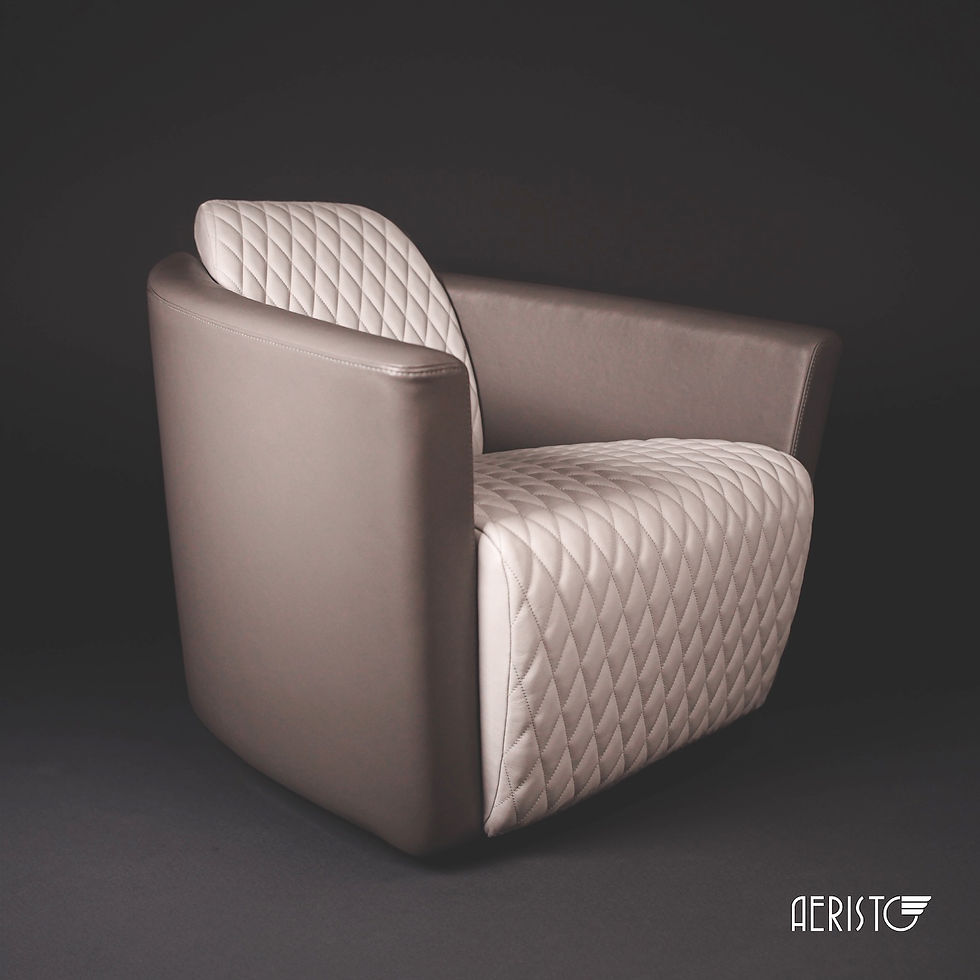
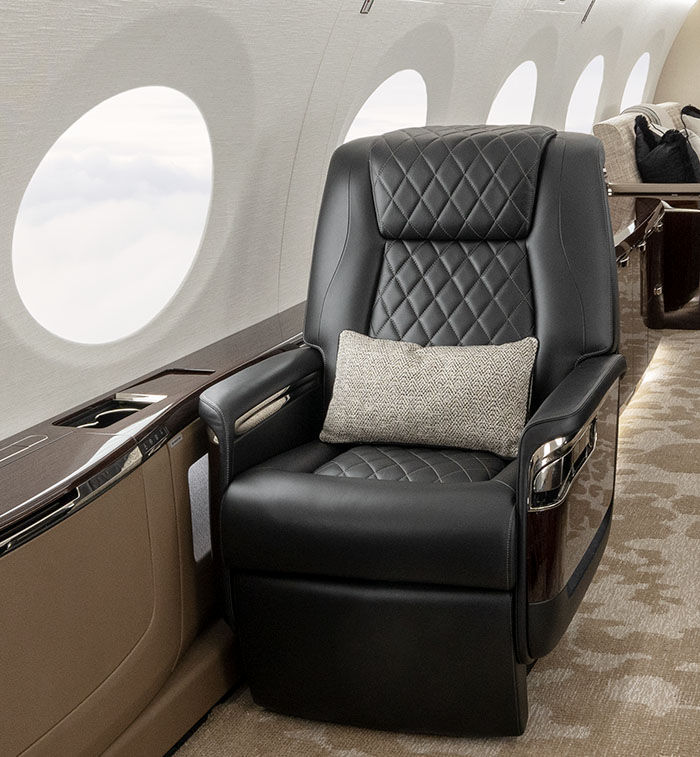
Gulfstream G-700 / Multi-function Single Seat
"These airframers aren't simply commissioning better chairs from a catalog anymore — they're designing entire zones of the aircraft around how a passenger's body and schedule change over a long sector."
Built for the Real World
Whichever collection a customer chooses, the leather has to keep performing long after the aircraft leaves the completion center. Business jet cabins cycle through dramatic swings in temperature and humidity. Passengers board with coffee, wine, sunscreen and cosmetics — all capable of staining ordinary upholstery. Frequent cleaning is a given, especially on charter and corporate aircraft where appearance reflects directly on the operator's brand.
Every Green Hides collection is finished for soil resistance, stain resistance and water repellency without sacrificing natural feel. Flameproofing happens during the tanning process itself, rather than as an add-on treatment, helping ensure lasting FAA compliance without affecting appearance or flexibility. Quality control runs deep: each production run is inspected multiple times in Italy, then reviewed again in the United States, so color, finish and performance stay consistent shipment after shipment.
"It's easy to focus on how a leather looks," Hill says. "But our customers also depend on consistency. They need confidence that the hide they receive six months from now will match the one they're installing today."
Much of that work happens out of sight — hide selection, tanning chemistry, the back-and-forth between the American office and the Italian manufacturing teams. None of it shows up in a finished photograph, but it's often what determines whether an installation succeeds. "Luxury is built long before someone sits in the seat," Lagnerini says. "It's built through thousands of decisions made during production."

%20copy%202.jpeg)
Aeronautica has become something close to an industry standard. Crafted from premium European full-grain hides, it strikes a balance many designers spend years chasing: soft without feeling delicate, elegant without feeling overly refined, and durable enough for years of service while retaining the natural character that only full-grain leather offers.
"There is something timeless about a beautifully finished full-grain leather," Lagnerini says. "You can immediately recognize its authenticity." Rather than correcting away natural variation, Aeronautica leans into it — a quality that matters more as cabins trend toward handcrafted, residential-style environments.
Then there's AeroDream, the flagship product, which started not in a design studio but in conversation. At trade shows around the world, the Green Hides team kept asking designers, upholsterers and completion specialists the same question: if you could create the perfect aviation leather, what would it include? The answers were remarkably consistent — extraordinary softness, superior environmental credentials, advanced antimicrobial protection, compliance with evolving international standards, and above all, unmistakable luxury.
"We didn't start by asking what we wanted to manufacture," Hill recalls. "We started by making a list of everything customers wished existed."
Produced from carefully selected European bull hides, AeroDream features an exceptionally soft nappa grain that sets it apart immediately. "It's one of those leathers people instinctively reach out and touch," says one completion specialist who has used it on multiple VIP aircraft. "The softness surprises people." Beneath that hand is real technical substance: AeroDream is carbon-neutral certified, incorporates antibacterial and antiviral technology, and meets demanding Airbus and Boeing smoke density and toxicity requirements. "It still has to feel like luxury," Lagnerini says. "Performance alone isn't enough."
10
INSTALLMENT

10




W
alk through the completion center of a modern business jet, and it's clear these aircraft are no longer just about transportation. They're airborne homes and offices – at levels that have never existed before. Wellness, connectivity, sleep, dining, air quality, and highly advanced materials. They barely resemble the jets of the early 2000s. Technical advancements, functional leaps, and material evolution that would not even have been imaginable back then. They're all the norm now, and the curve remains in the vertical posture.
One would think an organic material like leather would be immune to such technical advancements. It couldn't be further from the truth. Few interior finish materials carry more of that weight than leather. Both the technical and aesthetic advancements of aviation leather are soaring.
For more than two decades, Green Hides has approached the advancement of leather from an unusual angle. Rather than following industry trends, the company has kept asking a single question: what should aviation leather become? What will the design community want for their customers in the years ahead?
Article layout by
E L L I E F R E N C H
JCF Magazine Special Contributor

"Reserved" Seating
PART ONE: Private Jet VIP Chairs
This is the world of the true one-off — a chair specified the way a suit is, nothing off the rack. Nobody here optimizes for cycles or turnaround time between passengers. They optimize for one owner, one mission, and a finish standard closer to yacht fit-out than anything resembling a commercial cabin.
Collins Aerospace: The Quiet Physics of Floating Furniture
_________________________________________
Collins Aerospace's Executive & VIP Seating division treats the private jet chair as a genuine engineering puzzle, not just a foam buildup / upholstery exercise. Its signature move is "mini-base" seating — a patented, track-mounted pedestal that shrinks the traditional seat base by roughly 50%, so the chair appears to hover within the cabin rather than a big box bolted to the floor. It's a small trick with an outsized visual payoff: more usable floor space, cleaner sightlines, and a cabin that reads less "airplane" and more "very expensive living room." Collins backs this with a full range of single and double executive seating plus VIP divans, certified across the 9G, 16G, and 21G structural categories that different aircraft platforms demand, and it recently doubled the production floor at its Medley, Florida facility to keep pace with demand — never a bad sign for an industry segment.
For owners who want privacy beyond even a very good chair, Collins' Elite and Serenity suite platforms bring enclosed, door-equipped compartments into the VIP cabin conversation — full separation on demand, open concept when you'd rather not feel cloistered. On the drawing board: continued investment in that Florida facility suggests Collins is betting the demand for genuinely private, structurally serious VIP seating keeps climbing, not leveling off.


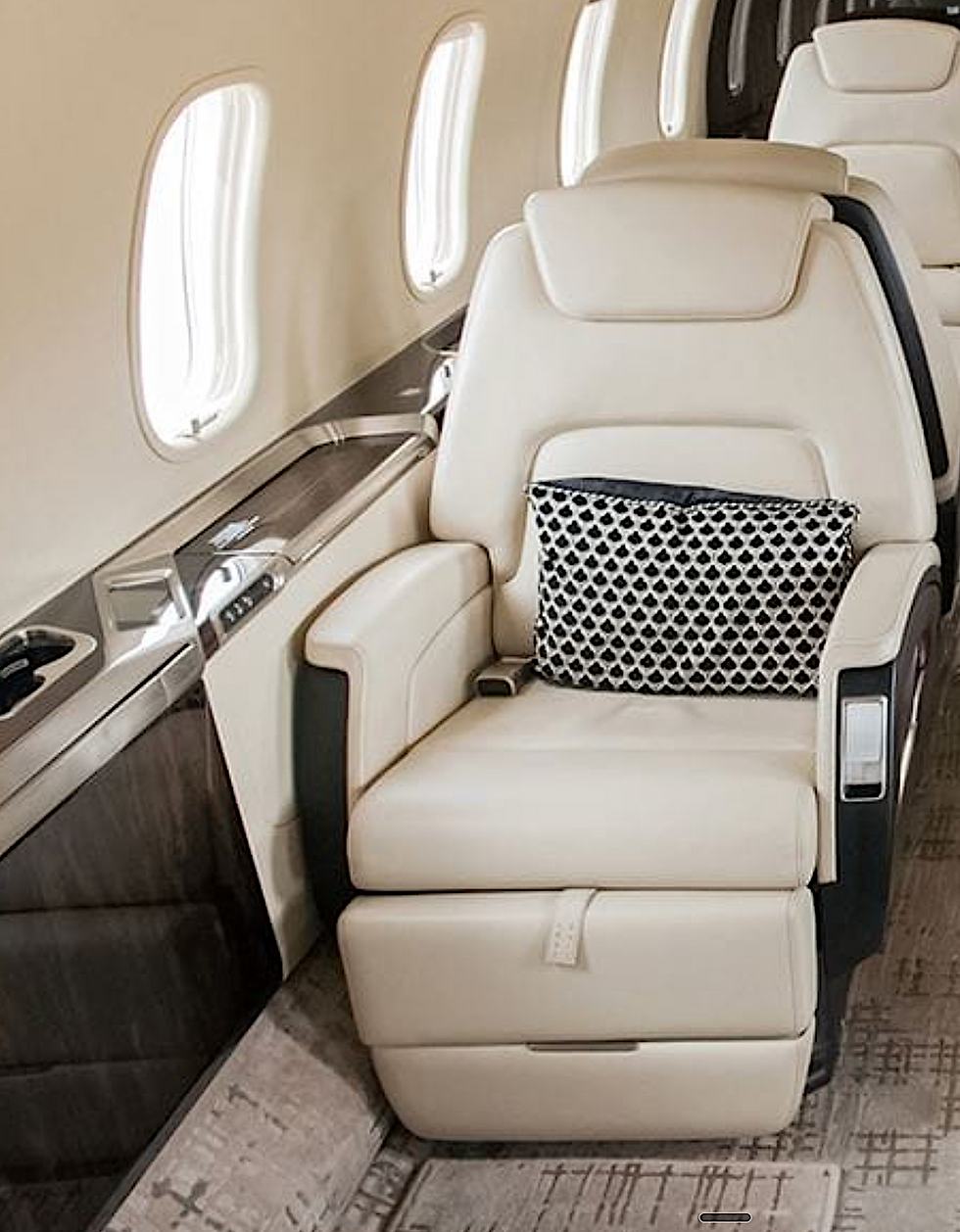
Iacobucci's VIP seats are already flying on some of the world's most closely watched private aircraft, built to the same safety and reliability standards as anything else in the cabin but with a level of customization — materials, stitching, proportions — that reads more couture atelier than parts catalog.

%20copy%203.png)


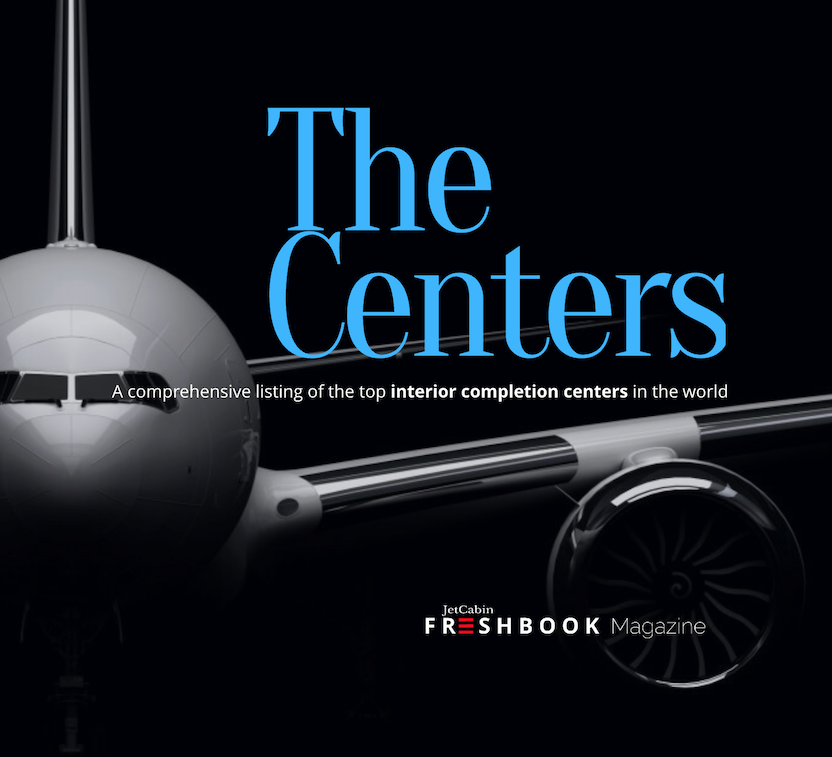
T H E C E N T E R S
Another first for JCF Magazine. THE CENTERS is a brand new permanent resource with its own dedicated page. A comprehensive listing of the top completion centers - worldwide - plus additional independent completion management resources to help owner / opearators and private flight departments make iformed decisons.
Image courtesy VIP Completions

Iacobucci HF Aerospace: Italian Design House Energy
_________________________________________
If Collins brings aerospace engineering discipline, Iacobucci HF Aerospace brings something closer to automotive design pedigree. The Italian manufacturer's VIP Seat Division — built in partnership with Designworks USA, BMW Group's design studio — treats the private jet chair the way a concept-car interior gets treated: as a statement piece as much as a functional object. The pairing makes sense on paper and even more sense in person; this is a company that has spent years collaborating with names like Pininfarina on cabin seating, chasing the kind of sculpted, hand-finished silhouette that automotive designers obsess over and aviation engineers don't always get to.
Iacobucci's VIP seats are already flying on some of the world's most closely watched private aircraft, built to the same safety and reliability standards as anything else in the cabin but with a level of customization — materials, stitching, proportions — that reads more couture atelier than parts catalog. The company was acquired by Japan's Jamco Corporation in late 2025 but continues operating independently under its existing leadership, which should mean more resources behind the same design-forward instincts rather than a change in direction. Worth watching for what the BMW Designworks partnership produces next — automotive design language has a habit of eventually reshaping how an entire category thinks about form.

W
alk through the completion center of a modern business jet, and it's clear these aircraft are no longer just about transportation. They're airborne homes and offices – at levels that have never existed before. Wellness, connectivity, sleep, dining, air quality, and highly advanced materials. They barely resemble the jets of the early 2000s. Technical advancements, functional leaps, and material evolution that would not even have been imaginable back then. They're all the norm now, and the curve remains in the vertical posture.
One would think an organic material like leather would be immune to such technical advancements. It couldn't be further from the truth. Few interior finish materials carry more of that weight than leather. Both the technical and aesthetic advancements of aviation leather are soaring.
For more than two decades, Green Hides has approached the advancement of leather from an unusual angle. Rather than following industry trends, the company has kept asking a single question: what should aviation leather become? What will the design community want for their customers in the years ahead?
Article layout by
E L L I E F R E N C H
JCF Magazine Special Contributor


.png)
The Airframers Themselves: Gulfstream, Bombardier, and Dassault
_________________________________________
Increasingly, the largest private jet manufacturers aren't outsourcing the chair at all — they're engineering it in-house, as inseparable from the airframe as the wing. Gulfstream's G700 arrives with handcrafted seats that articulate and berth into genuine beds, part of a cabin architecture configurable into up to five distinct living areas. Bombardier's newly certified Global 8000 leans on its signature Nuage seat — still one of the segment's most talked-about pieces of industrial design for its cantilevered, tilt-link recline — spread across four cabin zones for up to 19 passengers.
Then there's Dassault, which used its all-new Falcon 12X to make a genuinely audacious claim: Zero-G Recliner Seats with biometric sensors that actively adjust passenger posture to reduce pressure and fatigue on long legs. Paired with a cabin nearly ten feet wide — Dassault's widest ever — configurable into a master suite, dining area, media lounge, and private office, the 12X reads less like an airplane and more like a well-appointed apartment that happens to cruise at 51,000 feet. Deliveries begin late this year, with production slots sold out through 2028 — a reminder that in this segment, "waitlist" is itself a status symbol.
What's notable about all three programs is how deliberately they blur "seat" into "room." These airframers aren't simply commissioning better chairs from a catalog anymore — they're designing entire zones of the aircraft around how a passenger's body and schedule change over a long sector, then building seat, lighting, and cabinetry as one coordinated system.
Greenpoint Technologies (a Safran Cabin company): Head-of-State Standard
_________________________________________
Greenpoint doesn't so much sell chairs as sell entire private ecosystems of rest and work, and it operates at a level of confidentiality that makes most VIP completions shops look positively chatty. As the completions house behind some of the world's most closely guarded Boeing Business Jet 787-9 interiors, Greenpoint's AeroSuite — winner of the Cabin Design Award at the 2026 International Yacht & Aviation Awards — fuses a genuine lie-flat bed with a separate reclining lounge seat inside one fully enclosed suite, plus a sliding table, full-height wardrobe, and an oversized monitor for the passenger who insists on scrolling market data at 41,000 feet.
What's next for Greenpoint is, characteristically, need-to-know. The company has more VVIP BBJ 787-9 completions underway for confidential clients, continuing its quiet dominance of the head-of-state and ultra-high-net-worth segment. If history is any guide, whatever rolls out of Greenpoint's hangars next won't be photographed for a press release — it'll be photographed for a security briefing.
T H O M A S C H A T F I E L D
The Two Clock Problem
A technological time lesson by

The Second Ending
Step aboard almost any modern business jet and the material question announces itself immediately. Is that seat wrapped in supple leather, or is it a richly textured woven fabric that feels more like a couture jacket than an airplane seat cushion? For decades, the answer leaned overwhelmingly toward leather. Today, the conversation is more balanced — and more interesting.




Sometimes, it's a particular 'hand' the designer is looking for - a textural departure from leather.

R O B I N B U T L E R
When we think of Heritage, it brings up memories of a time when style, glamor, sophistication, elegance and speech were a natural reflection of society. Hollywood exhibited these refined distinctions of cadence in voice and music, in the midst of weaving the facts of life in lyrical harmony.
The buoyant song “Diamonds Are A Girl’s Best Friend” originally written as a Broadway Musical was later adapted in the movie “Gentlemen Prefer Blondes” starring Marilyn Monroe and Jane Russell.
True to the lyrics in the song, “square-cut or pear-shaped, these rocks don’t lose their shape” - Diamonds indeed do not lose their shape. In the song Lorelei (Marilyn Monroe) calls out Tiffany’s, Cartier, Black Starr, Frost Gorham, Harry Winston to tell her more about these precious “rocks.” This is our fascination with “Diamonds” and the heritage brand Tiffany that still speak to us today.
S W E E T
B L U E at 5 1, 0 0 0 ft.

WHICH LITTLE BLUE BOX DO YOU TRAVEL WITH?


AIRBORNE FASCINATION WITH THE BLUES

Article by
R I C H A R D N. Z I S K I N D
Chief of Staff to the Board of Directors @ Alerion Aviation
JCF Magazine Special Contributor
private jet is often defined by its performance—range, speed, and engineering precision. Yet its true value is not measured at altitude but experienced within the cabin. It is here that the aircraft becomes personal, where utility transforms into experience, and where the asset assumes both tangible and intangible worth. The interior is, unequivocally, the heart and soul of the aircraft.
"This is where value becomes tangible."
In today’s market, a thoughtfully designed and well-maintained interior is not merely an aesthetic asset, it is a financial one. A modernized cabin can significantly elevate an aircraft’s market position. Refurbished interiors in large-cabin jets such as the Gulfstream G650 or Bombardier Global 7500 routinely command multimillion-dollar premiums over comparable aircraft with dated finishes.
A
CEO - Camber Aviation Management
T H O M A S C H A T F I E L D

Thomas Chatfield - Executive Contributor &
CEO - Camber Aviation Management
But as Mr. Chatfield accurately points out – there is a second ending to every completion contract – one that is rarely acknowledged. The second ending is the day you stop noticing the aircraft and simply make yourself at home in it. And it’s completely unexpected. It’s a significant milestone for an owner but few people in the industry plan for it.
Which is a shame because the second “ending” can’t take place until something else has been dealt with. Whether it happens during the first flight; or after a month or two of flights, at some point, maybe over the first cup of coffee, there comes a moment when you notice… the thing.
- T h o m a s C h a t f i e l d
This is the 15th installment of Airborne Cafe. We are proud to embark on this ongoing series of thoughts, extollings, and stories from one of the premier figures in our industry. In each issue, Thomas Chatfield will offer us thought-provoking articles like the one above - each of them relevant and insightful from the perspective of private aviation. Simply hit the link at right to finish the article, and while you're there, learn more about Camber Aviation Management and the importance of their work


I
n this 'eye-opening' piece, Thomas Chatfield reminds us that there are in fact, 'two' endings to every completion contract. Naturally, there's the one we're all familiar with – "Fly Away Day". The cold-soaks have been done, rigorous inspections and squawks carefully addressed. The aircraft is perfect, inside and out. The sun is shining, the completion crews and execs are all gathered for the fanfare. The aircraft's APU is whining. It's fueled and ready to depart with its proud owners. It's a jubilant moment to say the very least.


So who are the players? What are they building? And what does “state of the art” actually mean right now?
Let’s dig in.



S H O W C A S I N G T H E W O R L D ' S T O P D E S I G N E R S - A T T H E T O P OF T H E I R G A M E
Image courtesy of Sotto Studios


Owner / Operators and Flight Departments, Welcome Aboard.

The Septem 2026 Installment of Jetzign is Proud to Feature
JETZIGN is a ongoing feature in each issue of JCF Magazine,
as well as a permanent section. The purpose of Jetzign is to display the talents, techinical skills and completion oversight expertise of the world's most recognized designers (both the independents and those who preside over the design departments within major centers). Within each Jetzign feature article, we focus on the work of a specific designer and illustrate the body of their work via video animation, still images and narratives from the designer.
M A R I E - L I S E B A R O N
The Baron Institute

S E P T E M B E R F E A T U R E D D E S I G N V O I C E

Written by:
Marie-Lise Baron / The BARON Institute
MAJOR CHANGE, QUIETLY HAPPENING
Analyzing the Technical and Aesthetic Protocols
of Today's Ultra-Luxury Jet Cabin Design.
At most points along the history of our industry, regulatory constraints and the pursuit of truly amazing interior cabins - like those in our homes or yachts - were completely at odds. Like warring factions, the two forces were destined to battle - almost always leaving owners and designers to tread in the wake of compromise and unfulfilled aspirations. Have regulatory constraints relaxed? No! Have designers and owners set their expectations lower? Of course not! Yet quietly and with little fanfare, a middle faction has arisen: a group of visionary companies, talented designers, and 'never say never' engineers are simply sidestepping all the conflict and are making huge leaps - from the middle, out.
The prestige mobile design industry is undergoing a profound structural transformation. While high-end residential design has long been defined by the simple selection of appealing materials and the expression of a purely decorative signature, the sectors of business aviation, elite yachting, and bespoke transport now impose a radically different paradigm. Within these enclosed, high-velocity environments, creative design can no longer be decoupled from cutting-edge engineering. For the international UHNWI (Ultra High Net Worth Individuals) clientele, luxury no longer resides in the decorative; it is found in an invisible, highly complex synthesis of regulatory compliance, physical material performance, and the absolute personalization of the spatial experience.
At the intersection of these technical demands and aesthetic aspirations, experienced designers such as Marie-Lise Baron and her firm Marie-Lise Baron Design are developing methodological approaches where engineering and art find a meticulous equilibrium. This editorial provides an in-depth analysis of the technical requirements and market dynamics governing the design of these elite environments. It examines the complexities of certification processes, artisanal-industrial synergy, and the emerging horizons that are redefining ultra-luxury from private air travel and superyachts to the frontier of space architecture.


K I S M E T

Five years ago when we launched Freshbook Magazine, it had one purpose: to pull together the entire global community of interior related companies - Cabin Suppliers, Completion Centers and Design Studios. In fact we're only one of two magazines in the world that focuses entirely on jet cabin interiors - and we're the sole such all digital publication.
But today, we're extremely proud to announce a NEW permanent segment to our magazine. Up until little more than a year ago, 100% of our subscribers and social media followers were 'companies' in one of the three categories above. Today, however, Owner / Operators & Flight Departments account for almost 9% of our subscriber base - and it's growing. It's been a very organic trend and without solicitation. Yet, as you might imagine, we're very happy about this new top-tier subset of Freshbook subscribers, a group whose newfound attention adds obvious value to the advertisers and readers we serve!
Check out our exclusive, entirely dedicated page for this new very special audience!

Owner / Operators, Welcome Aboard.


Looking For Problems That Haven’t Been Solved.
Ask anyone at Green Hides what drives new product development, and the answer is consistent: they listen. Trade shows, designer roundtables, completion center visits and everyday customer conversations all become chances to spot what the market is still missing.
"When we begin developing something new, the first question isn't 'what can we make?'" Hill explains. "It's 'what problem hasn't been solved yet?'"
That approach has produced a steady run of innovations rather than a rotating set of trend-driven collections. Sometimes the answer is an entirely new leather. Sometimes it's a rethought manufacturing process. Sometimes it's simply challenging an assumption the industry has carried for decades.
Three Leathers, Three Purposes
Spend time around completion centers and one thing becomes obvious fast: no two customers define luxury the same way. One owner wants understated elegance; another wants rich textures and bold, handcrafted detail. Designers are constantly balancing aesthetics against engineering limits, and every material has to look beautiful while meeting strict aviation regulations and holding up to years of daily use.
Rather than building one collection and simply expanding its color palette, Green Hides developed three distinct aviation leathers, each built around a different set of priorities but sharing the same commitment to craftsmanship.
"It's never been about creating a good, better, best hierarchy," Hill says. "Each collection has its own purpose. Some customers prioritize value, others prioritize appearance, others want every premium feature available. We wanted to give designers meaningful choices without compromising quality."
Supersonic, the company's enhanced-grain aviation leather, is built around consistency and value. It offers exceptional durability, a uniform appearance from hide to hide, and an expanding palette of contemporary colors — a real asset as cabins move away from traditional beige and gray toward warmer, more residential-inspired interiors. Completion specialists appreciate the predictability it brings to cutting and upholstery.

The Role of Completion Centers
In this highly specialized ecosystem, the interior designer does not operate in a vacuum. Instead, they collaborate closely with Completion Centers, which act as the industrial master builders of the aviation world. These state-of-the-art facilities receive "green" aircraft—planes delivered straight from the assembly line with completely bare, uninsulated metal fuselages. The completion center is responsible for installing cabin systems, acoustic and thermal insulation, inflight entertainment (IFE) cabling, environmental control systems, and the final custom-engineered furniture.
In this environment, project management is a critical discipline. The slightest delay in the supply chain of a certified wood veneer or a bespoke piece of cabin cabinetry can cascade, delaying the delivery of the entire aircraft. In business aviation, a grounded, unfinished aircraft represents a major financial loss for the owner. For this reason, rigorous planning and meticulous quality control—methodologies championed by seasoned designers like Marie-Lise Baron—are vital to ensuring the commercial viability and timely execution of these multi-million-dollar projects.

Reymond-Langton Design
Established in 2001 by the talented design duo of Pascale Reymond and Andrew Langton, both of whom already had over a decade’s experience in the superyacht industry, we are committed to creating designs that are as beautiful as they are functional whilst, at the same time, ensuring our clients’ expectations are not only met but exceeded, with projects being delivered on time and on budget. I
n 2002, Jason Macaree joined the team as a director. Coming from different creative backgrounds – Pascale gained a Master’s degree in Art History from La Sorbonne, Paris before moving to London to study Interior Design while Andrew and Jason graduated with a BA (Hons) in Transport Design – the team’s individual blend of skills and professional expertise are complementary, resulting in a remarkable and much sought after design team delivering unquestionable quality with superb attention to detail

This synergy of craftsmanship and engineering was so profound that it became the subject of a dedicated editorial art book, documenting the landmark achievements born from the collaboration between the Austrian firm, F/List, and designer Marie-Lise Baron.


BBJ MAX 8 / C r u p i e t C o n c e p t


Article by
R I C H A R D R O S E M A N
N
K, so picture this: You've just shown up at the completion center to take delivery of your $85ML state-of-the-art business jet with an avionics and connectivity package that would make SpaceX jealous, plus enough range to fly non-stop to almost anywhere your heart desires. You step aboard your freshly minted jet and spy the beautifully upholstered VIP seats with the Italian leathers and plated metal trims you chose months earlier with your designer.
But over the course of the next hour or so, as you sit in your chair anticipating the maiden flight back home, an ever so slight, and not entirely unfamiliar disappointment, begins to tug at you. Why is it that after all these decades, four previous aircraft, and stratospheric costs, the seat's comfort still falls way short of what you enjoy at home? Instead, both the rigid profile and the comfort feels like it was designed during the Reagan administration—because, quite possibly, it was.
Welcome to one of aviation's most puzzling paradoxes: Why do VIP aircraft seats lag so dramatically behind the ergonomic marvels we enjoy in our living rooms, offices, and even our cars? It's a question that haunts aircraft owners, frustrates completion centers, and keeps chiropractors in business from Teterboro to Dubai.
othing starts without a design...and nothing commands our attention like a great one. But a design, like the product of any creative endeavour, is ultimately judged by the pair of eyes looking at it. Yet within the framework of a design competition or an open evaluation conducted by hundreds, or even thousands, it's almost inevitable that one or two designs will find favor, over the others, among a large portion of that audience. Does it mean those designs are better? It's an unanswerable question of course. But it certainly means those few designs are standing out, again and again - above the rest - by those who have been asked to evaluate them.
In this piece, we took a look back at the winners of several globally recognized aviation design competitions - and selected some of our own favorites to show as some of the "best of the best" designs, by some of the top interior architects and designers over 2025.
We hope you like our internally curated selection of interior cabin concepts. We recognize your own preferences may not align with ours completely - but certainly we can all agree that beautiful design is a remarkable thing to behold - and always worth a second look!
I N T E R I O R
The Reymond Langton Yacht Design Studio

Established in 2001 by the talented design duo of Pascale Reymond and Andrew Langton, both of whom already had over a decade’s experience in the superyacht industry, we are committed to creating designs that are as beautiful as they are functional whilst, at the same time, ensuring our clients’ expectations are not only met but exceeded, with projects being delivered on time and on budget. In 2002, Jason Macaree joined the team as a director.
Coming from different creative backgrounds – Pascale gained a Master’s degree in Art History from La Sorbonne, Paris before moving to London to study Interior Design while Andrew and Jason graduated with a BA (Hons) in Transport Design – the team’s individual blend of skills and professional expertise are complementary, resulting in a remarkable and much sought after design team delivering unquestionable quality with superb attention to detail.
Is the Shift Real?
Yes, though it's evolutionary rather than revolutionary. Cabin design has been moving away from the traditional dark-wood-and-heavy-leather aesthetic that defined business jets for a generation, toward brighter, softer, more personal environments that borrow more from residential and hospitality design than from the cockpit. That shift favors fabric. Wool blends, jacquard weaves and brushed textures introduce warmth and tactile variety that an all-leather cabin can't easily achieve on its own.
At the same time, leather isn't losing ground so much as changing jobs. Owners and designers increasingly treat leather and fabric as complementary rather than competing choices — leather for the surfaces that take the most daily abuse, fabric for the surfaces where texture, color and comfort matter more than wear resistance. The result is fewer all-leather or all-fabric cabins and more deliberately blended interiors.
Sustainability is accelerating the trend as well. Buyers are asking more questions about environmental credentials than they did five years ago, and both categories are responding — leather makers are expanding carbon-neutral and PFAS-free lines, while fabric mills are introducing recycled and bio-based fibers. Neither material has a clean sustainability advantage over the other; the real shift is that both are being asked to prove it.
Where Each Material Shows Up
The cabin isn't one surface, and the material choice tends to change by zone.
Seating remains leather's stronghold. Its durability, ease of cleaning and resistance to spills make it the default for seat bottoms, backs and armrests — the surfaces that see the most contact, coffee, sunscreen and daily wear. Leather also carries the tactile signal of luxury that many owners still associate most strongly with a premium cabin.
Fabric tends to dominate the softer, less contact-heavy surfaces: seat cushions and pillows, headliners, curtains and dividers, and accent panels. Upper sidewalls and headliners in particular are increasingly finished in lighter fabrics to brighten the cabin and avoid the closed-in feel that heavy leather paneling can create. Carpets and some bulkhead treatments follow a similar logic.
The most interesting territory is the overlap. Lower sidewalls often use embossed or tipped leather for tactile dimension near where hands and shoulders make contact, while upper surfaces stay in fabric. Seats themselves increasingly blend the two — leather bolsters and wear surfaces paired with fabric inserts or cushions for a softer center seating area. It's a construction approach that gives designers more creative range than an all-leather or all-fabric seat ever could.

%20copy%202.jpeg)
Photo courtesy: Green Hides Leather Studio
"...but only leather comes with the nose. It's delicious...that organic smell coming from a freshly tanned, buttery soft Italian bullhides. It filled the cabin the minute we boarded - begged us to coze up for the eight-hour flight back to Zurich."
- Thomas Bachmann
BBJ Owner
II. Artisanal Craftsmanship and Industrial Synergy: The F/List Benchmark
The realization of exceptional interiors depends heavily on the ability to push the physical boundaries of traditional luxury materials. In this pursuit of innovation, collaboration between interior designers and specialized manufacturers is essential for transforming an ambitious artistic vision into a certified aeronautical reality.
An outstanding example of this industrial-creative synergy is the close working relationship designers maintain with the prestigious Austrian firm F/List. As a global leader in high-end cabin interiors and artisanal cabinetry for business aviation and luxury yachts, F/List has built its reputation on developing unique, patented materials and technologies. Key innovations driving the industry forward include:
● Ultra-thin wood veneers on composite cores: This technique allows precious, highly figured wood species to be bonded to incredibly lightweight aluminum honeycomb structures, satisfying stringent aviation weight limits without sacrificing the visual depth of natural solid wood.
● Innovative stone composites: High-tech processes that bond genuine stone (such as marble, quartzite, or granite) sliced to millimeter-thin tolerances with flexible, high-impact backing materials, allowing stone countertops and flooring to be installed in environments subjected to flight vibrations.
This synergy of craftsmanship and engineering was so profound that it became the subject of a dedicated editorial art book, documenting the landmark achievements born from the collaboration between the Austrian firm and designer Marie-Lise Baron. This volume, which chronicles the intersection of rigorous technical design and master cabinetry, is proudly displayed and available to VVIP clients and industry professionals at the entrance of several of F/List's Completion Centers and engineering offices worldwide. It serves as a testament to the crucial role that industrial-creative partnerships play in shaping the modern standards of luxury travel.


"Not quite yet maybe, but the relationship between superyachts and private aviation is getting chummier each year".
Superyacht Design - Our Oceangoing Companion
The convergence of skills between business aviation and the elite marine sector is an increasingly prominent market dynamic in the ultra-luxury industry. The owners of superyachts share the exact same demands for absolute exclusivity, privacy, and performance as users of private jets. However, transitioning a design signature from the sky to the ocean introduces completely distinct physical and structural challenges.
While aviation design focuses intensely on weight reduction and the behavior of materials during rapid thermal events, naval architecture must contend with the relentless hostility of the marine environment. Constant humidity, airborne salt spray, and the continuous structural flexing of a hull at sea require highly specialized surface treatments and the selection of inherently stable timbers (such as plantation-grown teak or vacuum-infused mahogany) alongside marine-grade metals.
Continue this article via the link below...


LENGTH: 122 M / 400'.3" TYPE: MOTOR YACHT GUESTS 12
LAUNCHED: 2024 BUILDER: LÛRSSEN CABINS: 8
M/Y K I S M E T
Built by the renowned German shipyard Lürssen, with exterior design by Nuvolari Lenard and an interior by Reymond Langton Design under the creative direction of Shanna Khan, KISMET brings together bespoke detail and unique craftsmanship at every level. A symbol of uncompromising luxury, she sets a new standard for excellence in the industry.
Crowned World Superyacht of The Year 2025 at the coveted World Superyacht Awards in Venice, the judges described the yacht as having “outstanding lifestyle features” and “spellbinding interiors where no centimetre is overlooked”.
Accommodating up to 12 guests in 8 cabins, KISMET offers exceptional entertainment amenities, outstanding culinary experiences and boasts a full suite of water sport toys and tenders for you and your guests to enjoy.
KISMET provides a sanctuary for those passionate about wellness, featuring a Balinese-inspired spa. Guests can indulge in amenities such as a hammam, sauna, and cryotherapy chamber. Additionally, there's a private treatment room equipped with a massage table, waterfall shower, and chromotherapy bathtub. The dedicated gym and yoga studio boast opening, sea terraces and are complemented by a juice bar for refreshment.
KISMET represents the most exclusive luxury yacht charter experience on the planet.
Please request the brochure with full imagery through the contact form below.


W
alk through the completion center of a modern business jet, and it's clear these aircraft are no longer just about transportation. They're airborne homes and offices – at levels that have never existed before. Wellness, connectivity, sleep, dining, air quality, and highly advanced materials. They barely resemble the jets of the early 2000s. Technical advancements, functional leaps, and material evolution that would not even have been imaginable back then. They're all the norm now, and the curve remains in the vertical posture.
One would think an organic material like leather would be immune to such technical advancements. It couldn't be further from the truth. Few interior finish materials carry more of that weight than leather. Both the technical and aesthetic advancements of aviation leather are soaring.
For more than two decades, Green Hides has approached the advancement of leather from an unusual angle. Rather than following industry trends, the company has kept asking a single question: what should aviation leather become? What will the design community want for their customers in the years ahead?
Article layout by
E L L I E F R E N C H
JCF Magazine Special Contributor
KISMET - Onboard Comfort & Entertainment
You and your guests can enjoy a variety of experiences on Kismet, notably a dancefloor where you and your guests can celebrate in style. Alternatively the latest beauty and hair treatments are available in the luxurious beauty room and take a break from a busy itinerary in the steam room. Take the opportunity to be thoroughly pampered and indulged in the spa plus soothe tired limbs and reinvigorate yourself in the sauna. Take a plunge in the pool under the sun and in addition head to the beach club and take advantage of indoor-outdoor living and entertaining. Maintain your fitness routine and work out in the well-equipped gym or sit back with a glass of champagne in the deck jacuzzi.
Whatever your activities on your charter, you'll find some impressive features are seamlessly integrated to help you, notably an elevator, making any part of the yacht quickly and easily accessible. At night, guests can enjoy a mesmerizing light spectacle in the water thanks to underwater lights and whether you want to work, use social media or stream movies on board this yacht, you can with Wi-Fi connectivity. You can stay comfortable on board whatever the weather, with air conditioning during your charter.


Simone Lagnerini
Keith Hill


I. The Business Aviation Paradigm: Designing Under Regulatory Constraints
Designing the interior of a private jet is akin to practicing architecture under strict regulatory surveillance. Unlike terrestrial design, every gram, millimeter, and chemical bond of any material introduced aboard an aircraft must undergo rigorous inspection and receive formal approval from civil aviation authorities such as the FAA (Federal Aviation Administration) or the EASA (European Union Aviation Safety Agency).
The Physics of Aeronautical Materials
The most demanding technical constraint in aviation cabin design is flame resistance. Every surface covering—whether premium leather, rare exotic wood veneer, delicate silk fabric, or high-density wool carpeting—must successfully pass stringent flammability testing, specifically the 12-second and 45-second vertical Bunsen burner tests. Crucially, compliance is not a one-time certification; each production batch or dye lot of a material must be individually tested and issued its own specific burn certification before installation.
Furthermore, the integration of rigid cabin structures, known as "monuments" (such as galleys, lavatories, credenzas, and divans), requires precise structural modeling to withstand extreme gravitational acceleration forces. In the event of an emergency landing or severe turbulence, these structures must meet dynamic impact criteria, resisting forces up to 9G in the forward direction. Consequently, designers and aerospace engineers must collaborate intimately from the initial pre-conceptual phase. This close integration ensures that the selected aesthetic materials do not compromise the aircraft's center of gravity or its maximum takeoff weight—which is calculated to the gram to preserve flight range—while guaranteeing absolute passenger safety during emergency evacuations.
Add paragraph text. Click “Edit Text” to update the font, size and more. To change and reuse text themes, go to Site Styles.
Add paragraph text. Click “Edit Text” to update the font, size and more. To change and reuse text themes, go to Site Styles.
Innovation Beyond Leather
Green Hides has built its reputation on leather, but it's increasingly known for something else: a willingness to rethink products the industry had simply accepted as good enough.
Sheepskin is a longtime favorite in business and VIP cabins for its comfort and natural temperature regulation. But traditional sheepskin creates real headaches for completion centers — the skins are relatively small and irregularly shaped, so applying them to today's larger seat designs often means excess waste, more sewing time and higher installation costs.
"When we decided to introduce sheepskin, we didn't want to simply become another leather company offering sheepskin," Hill says. "If we were going to do it, we wanted to solve the problems customers had been living with for years."
The result is AeroMerino, produced in consistent 24-by-42-inch rectangular panels rather than irregular natural skins. That standardized sizing improves nesting efficiency, cuts material waste and shortens cutting and sewing time — a meaningful advantage on large completion projects where labor often costs more than materials. The wool itself is premium Australian Merino, prized for softness, resilience and appearance, so the comfort aircraft owners expect comes paired with a manufacturing process that makes life easier for the people installing it.
A similar mindset shaped the company's approach to quilting. Decorative quilting has become a defining design element in modern cabins, but most suppliers have treated it the same way for years: small sewn inserts, mostly for seat centers. Green Hides invested in German-engineered quilting technology capable of producing sew fields up to 54 by 72 inches, opening the door to continuous quilted patterns on dividers, sidewalls, bulkheads, headliners and other architectural elements.
Tap the link below to follow this article . . .
Two Completely Different Worlds, One Vision
The story starts more than 25 years ago, when founder and President Simone Lagnerini left his native Italy with an ambitious idea. Italy was — and still is — the epicenter of the world's finest leather craftsmanship. Lagnerini believed there was an opportunity to bring that heritage directly into the American aerospace market.
"It wasn't simply about importing Italian leather," Lagnerini says. "The vision was to create a company that understood both worlds — the artistry of Italian tanning and the expectations of the North American aviation industry."
That combination got a major boost when Vice President Keith Hill joined the company a few years later. If Lagnerini represented generations of Italian leather expertise, Hill brought decades of experience serving business aviation customers across North America.
"Simone understands leather from its very beginning — where it comes from, how it's made, how every decision at the tannery affects the finished product," Hill says. "My background has always been understanding the customer — completion centers, designers, OEMs and operators. When you combine those perspectives, you begin developing products differently."
That balance still defines the company today. Unlike many suppliers that source leather through distributors or contract tanneries, Green Hides maintains shared ownership with its Italian manufacturing partners. Instead of choosing colors from an existing catalog, the team works directly alongside the tannery to develop new finishes, textures and performance characteristics built specifically for aviation interiors — giving the company flexibility while keeping tight control over how every hide is produced.


The Jet Business is the world's first and only street-level aviation showroom for the marketing and acquisition of corporate jet aircraft. Headed by Steve Varsano and based in London, The Jet Business represents its clients throughout the aircraft acquisition process, offering the most up-to-date product information, global market data, extensive industry relationships
and universal world-class expertise.
Explore the options of jet ownership. Learn more.





The Continental GT, Flying Spur and Bentayga are the very definition of a modern Bentley line-up, all built with the words of the founder, W.O Bentley ringing in the air: “I want to build a fast car, a good car, the best car in its class.”


Photo: Leopold Fiala -leopoldfiala.com
Safety will never take a backseat to aesthetics or the aspirations of owners, but just as surely, regulation need not be the enemy of modern jet cabin design.

.png)